The Empty Room Gets It First: Six Clues From a Bonnettes Soundcheck

Doors at seven. By twenty past four, the room has already heard the Bonnettes. Not the full show — nothing so tidy — but the private version: half a verse, a drum fill repeated until it stops wobbling, a joke that dies on its arse before the paying public gets anywhere near it. Soundcheck is the gig before the gig, and if you have ever been early enough to catch it through a propped fire door, you will know it has its own rules.
It would be easy to treat soundcheck as admin: plug in, check the levels, get chips. The Bonnettes do not. Their pre-doors routine is where arrangements are still soft, where the room is still being read and where the band's live chemistry is at its most unvarnished. The empty room hears the work. We hear the sparkle. These six clues sit somewhere in between.
1. The Half-Built Song That Nobody Claps For
There is always a new song in the soundcheck, and it is never finished. Bonnie will sing a verse at half strength, the guitarist will try one chord change and then another, and the drummer will lean into a fill that either lands or gets a raised eyebrow. Nobody claps. Nobody is meant to. This is the arrangement still deciding what it wants to be.
On a grey November afternoon in 2026, that song might be a future single with a chorus that has not yet earned its place. The band will play it twice, stop, laugh at one line, then strip the whole thing back to bass and vocal. The empty room hears the edit. By the time the same song reaches a full audience, it will sound inevitable. The clue is that it did not start that way.
2. The Walk-the-Room Test
Bonnie does not just sing into a microphone. She walks the room. Front row, back wall, the awkward corner by the fire exit, the bit under the balcony where every vocal goes to die. She claps. She talks. She asks the sound engineer to push something, pull something, soften the top end. Then she does it again with a tambourine, which is its own kind of truth-teller.
Every venue drinks sound differently. A low ceiling in Leeds will swallow a snare. A high ceiling in Bristol can make a backing vocal sound like it is arriving from another postcode. The Bonnettes tune to the room, not just to the instruments. That is the quiet work behind the sparkle: finding where the room is generous and where it needs a bit of persuasion.
3. The Two-Inch Drum Riser Shuffle
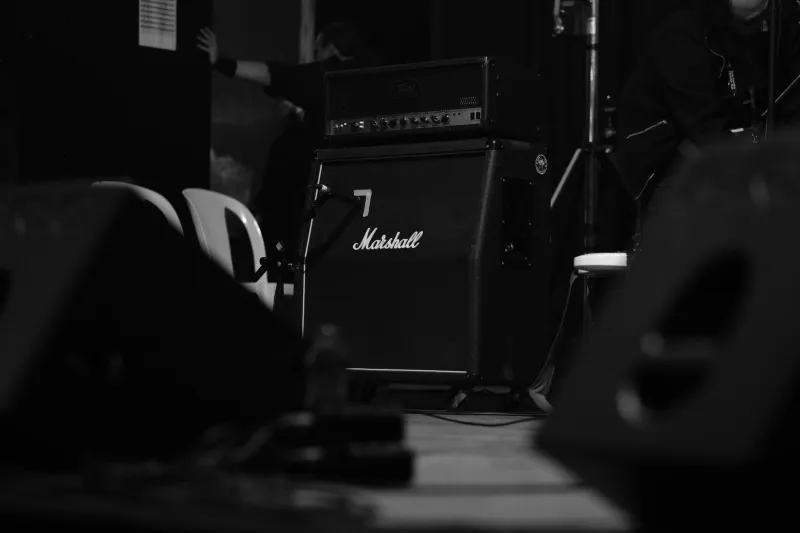
The drum riser moves two inches. Then it moves back. Then someone stands on it, someone else taps it, and the bass amp gets shifted by roughly the width of a chip shop fork. It looks like faffing. It is actually the band's live chemistry in physical form.
A Bonnettes soundcheck is full of tiny adjustments that never make the programme. The drummer wants eye contact with the bass player without leaning round a cymbal. Bonnie wants a clear path to the front edge without tripping over a monitor. The guitarist wants the amp where it can be heard but not where it will eat the vocal. None of this is glamorous. All of it is why the show feels loose rather than chaotic.
4. The Joke That Never Makes the Set
Soundcheck Bonnie is a different beast from stage Bonnie. She is looser, sillier and more likely to do a full character voice for a joke that will never survive the real set. The band laugh. The sound engineer laughs. The empty room gets the unedited version.
By showtime, most of that material is gone. Not because the band has become serious, but because a live set needs shape. The in-jokes are trimmed, the between-song chatter is tightened and the daftest lines are saved for the front row or the van. The empty room hears the raw material. The audience hears the edit. That is not a lack of personality; it is discipline wearing a sequinned jacket.
5. The Deliberately Rubbish Cover
At some point, the Bonnettes play a cover badly on purpose. Not a full song, usually — just enough of a 1980s pop chorus to reset everyone's ears and break the tension of hearing the same three notes repeated. It is gloriously shoddy. It is also a reminder that the band do not take themselves too seriously, even when they are being precise about a monitor mix.
The empty room hears the cover and understands the pact: the show will be tight, but it will not be stiff. That is a hard balance to strike. The Bonnettes get there by allowing themselves a rubbish verse of something famous before they go back to the serious business of making their own songs land.
6. The Door Test
The last ritual is the simplest. The house lights go up. The doors are opened. Someone plays a burst of the opening song at show volume while the engineer listens from the foyer. Can the vocal survive the doorway? Does the tambourine cut through the chatter? Is the low end doing something unpleasant to the glassware?
It is the least romantic moment of the day and one of the most important. The audience will never hear the door test, but they will feel its result. When the room fills and the lights go down, the six clues dissolve into the show. The empty room keeps its secrets. The rest of us just get the sparkle.
And that is the point. A Bonnettes soundcheck is not a rehearsal, and it is not a mini-gig. It is a conversation between a band, a room and a load of small, unglamorous decisions. The audience hears the finished article. The empty room heard the work first.